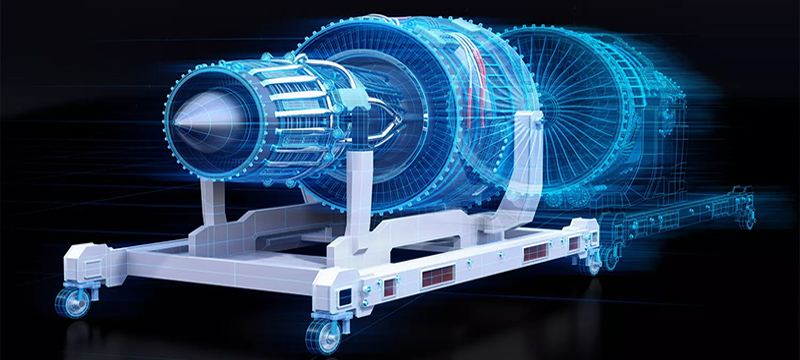
Digital Twins are emerging as a critical layer in the Internet of Things (IoT) stack, bridging the gap between physical assets and digital intelligence. By combining real-time data ingestion with simulation and analytics, Digital Twins enable organizations to model, monitor, and optimize complex systems with a level of precision that static dashboards cannot provide.
For IoT decision makers and architects, the value of Digital Twins lies not only in visibility but in actionable insight. As connected devices generate increasing volumes of data, the ability to contextualize, simulate, and predict outcomes becomes essential to improving operations, reducing risk, and supporting data-driven decision-making at scale.
Key Takeaways
Digital Twins create dynamic virtual representations of physical assets using real-time IoT data.
They enable simulation, predictive analytics, and operational optimization across industries.
Integration requires a combination of connectivity, data platforms, and modeling frameworks.
Scalability, data quality, and interoperability remain key technical challenges.
Digital Twins are evolving toward more autonomous and AI-driven decision systems.
What is a Digital Twin?
Digital Twins are virtual representations of physical objects, systems, or processes that are continuously updated using real-time data from IoT devices. They mirror the state, behavior, and performance of their physical counterparts, enabling monitoring, simulation, and optimization in a digital environment.
Within the IoT ecosystem, Digital Twins act as a convergence layer between data collection and advanced analytics. Sensors and connected devices feed telemetry into a digital model, which can then be used to analyze current conditions, predict future states, and test hypothetical scenarios without impacting the physical system.
How Digital Twins work
The architecture of Digital Twins typically involves several interconnected layers, combining physical devices, connectivity infrastructure, data platforms, and simulation engines.
At the edge, IoT sensors and embedded systems collect real-time data such as temperature, pressure, location, or operational metrics. This data is transmitted via connectivity technologies including cellular IoT, LPWAN, Wi-Fi, or industrial Ethernet to cloud or edge computing platforms.
Once ingested, data is processed and stored within IoT platforms or data lakes. The Digital Twin model uses this data to replicate the current state of the asset. Advanced implementations integrate physics-based models, machine learning algorithms, or hybrid approaches to simulate behavior and predict outcomes.
A typical workflow includes:
Data acquisition from IoT sensors and devices
Data transmission through secure communication protocols
Data processing and normalization in IoT platforms
Model synchronization with real-time data
Simulation and analytics for decision support
In more advanced architectures, edge computing plays a role in reducing latency by processing data closer to the source, enabling near real-time Digital Twins for time-sensitive applications such as industrial automation or autonomous systems.
Key technologies and standards
The deployment of Digital Twins relies on a combination of technologies spanning connectivity, data management, and modeling frameworks.
Connectivity technologies: LTE-M, NB-IoT, 5G, LoRaWAN, Wi-Fi, and industrial protocols such as Modbus or OPC UA.
Data protocols: MQTT, AMQP, HTTP/REST APIs for efficient data exchange between devices and platforms.
IoT platforms: Cloud-based or hybrid platforms for device management, data ingestion, and analytics.
Modeling frameworks: Tools supporting physics-based modeling, simulation engines, and digital representations of assets.
Data standards: Initiatives such as the Digital Twin Definition Language (DTDL) and Asset Administration Shell (AAS) for interoperability.
AI and analytics: Machine learning models used for predictive maintenance, anomaly detection, and optimization.
Interoperability remains a critical issue, as Digital Twins often need to integrate heterogeneous data sources and legacy systems across industrial environments.
Main IoT use cases
Digital Twins are being deployed across a wide range of industries, often where complex systems require continuous monitoring and optimization.
In industrial IoT, Digital Twins are used to model production lines, machines, and entire factories. They support predictive maintenance by identifying early signs of equipment failure and enable simulation of production changes before implementation.
In logistics and asset tracking, Digital Twins provide real-time visibility into the location and condition of goods. They can simulate routing scenarios, optimize supply chains, and improve inventory management.
Smart cities use Digital Twins to model urban infrastructure such as traffic systems, utilities, and public transport networks. These models help city planners test scenarios, manage congestion, and improve energy efficiency.
In the energy sector, Digital Twins are applied to power plants, grids, and renewable energy assets. They enable monitoring of performance, simulation of demand fluctuations, and optimization of energy distribution.
Healthcare applications include Digital Twins of medical devices or even patient-specific models, supporting diagnostics, treatment planning, and operational efficiency in hospitals.
Additional use cases include:
Fleet management and telematics optimization
Building management and smart HVAC systems
Oil and gas infrastructure monitoring
Aerospace system simulation and maintenance
Benefits and limitations
Digital Twins offer several operational and strategic advantages for organizations deploying IoT solutions.
Improved visibility: Real-time monitoring of assets and systems.
Predictive capabilities: Early detection of failures and performance issues.
Simulation and optimization: Ability to test scenarios without impacting operations.
Operational efficiency: Reduced downtime and improved resource utilization.
However, the implementation of Digital Twins also comes with constraints and trade-offs.
Data quality dependency: Inaccurate or incomplete data reduces model reliability.
Integration complexity: Connecting legacy systems and heterogeneous devices can be challenging.
Scalability issues: Managing Digital Twins for large fleets of assets requires significant infrastructure.
Latency constraints: Real-time synchronization can be difficult in distributed environments.
Cost considerations: Investment in sensors, platforms, and modeling tools can be substantial.
Organizations must balance these factors when evaluating the business case for Digital Twins.
Market landscape and ecosystem
The Digital Twins ecosystem spans multiple layers of the IoT value chain, involving a diverse set of stakeholders.
Device manufacturers play a foundational role by embedding sensors and connectivity into physical assets. Connectivity providers ensure reliable data transmission across cellular, LPWAN, or private networks.
IoT platform providers offer the infrastructure for device management, data ingestion, and analytics. These platforms often integrate with cloud services and edge computing solutions to support scalable deployments.
Software vendors and system integrators focus on building Digital Twin models, integrating data sources, and deploying simulation environments tailored to specific industries.
Standards bodies and industry alliances are working to improve interoperability and define common frameworks, which is critical for scaling Digital Twins across sectors.
The ecosystem is still evolving, with increasing convergence between IoT platforms, AI frameworks, and simulation technologies.
Future outlook
Digital Twins are expected to evolve toward more autonomous and intelligent systems, driven by advances in artificial intelligence, edge computing, and connectivity.
The integration of AI will enable more accurate predictive models and automated decision-making, reducing the need for human intervention in certain operational scenarios.
Edge computing will play a larger role in enabling low-latency Digital Twins, particularly in industrial environments where real-time responsiveness is critical.
Standardization efforts are likely to improve interoperability, allowing Digital Twins to scale across multi-vendor environments and complex ecosystems.
In the longer term, Digital Twins may extend beyond individual assets to represent entire systems-of-systems, such as supply chains, cities, or energy networks, enabling more holistic optimization.
Frequently Asked Questions
What is a Digital Twin in IoT?
A Digital Twin is a virtual model of a physical asset or system that is continuously updated using real-time data from IoT devices, enabling monitoring, simulation, and optimization.
How do Digital Twins differ from traditional monitoring systems?
Unlike static dashboards, Digital Twins incorporate simulation and predictive capabilities, allowing organizations to test scenarios and anticipate future outcomes.
What industries benefit most from Digital Twins?
Industries with complex operations such as manufacturing, energy, logistics, and smart cities benefit significantly from Digital Twins due to their need for real-time optimization.
What are the main challenges of implementing Digital Twins?
Key challenges include data integration, ensuring data quality, scalability, and the cost of deploying and maintaining the required infrastructure.
Are Digital Twins dependent on cloud computing?
While many Digital Twins rely on cloud platforms, edge computing is increasingly used to enable low-latency processing and real-time applications.
Related IoT topics
Edge Computing in IoT
Predictive Maintenance
Industrial IoT (IIoT)
IoT Data Platforms
Smart Manufacturing
AIoT: AI in IoT
The post Digital Twins in IoT: From Real-Time Data to Simulation and Optimization appeared first on IoT Business News.