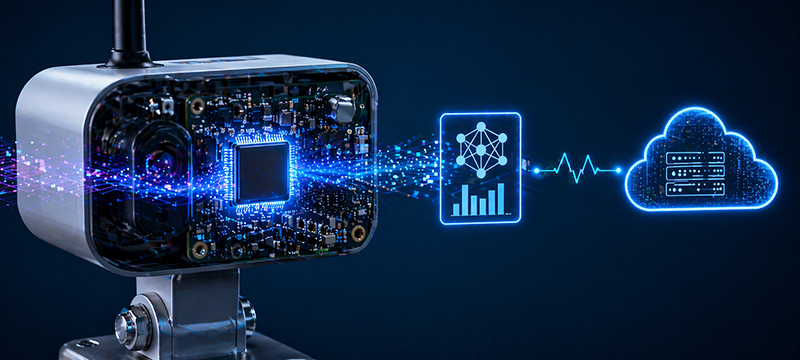
Edge computing has become a central architectural consideration in modern IoT deployments, particularly as connected systems scale in complexity and data intensity. Rather than relying exclusively on centralized cloud platforms, organizations are increasingly distributing processing closer to devices to address latency, bandwidth, and reliability constraints.
In this context, Edge Computing IoT architectures are reshaping how data is collected, processed, and acted upon. Understanding how edge computing works, where it delivers value, and what trade-offs it introduces is essential for decision-makers designing resilient and scalable IoT systems.
Key Takeaways
Edge Computing IoT enables data processing closer to devices, reducing latency and network dependency.
It supports real-time decision-making in latency-sensitive applications such as industrial automation and smart infrastructure.
Edge architectures combine hardware, software, and connectivity layers, often integrated with cloud platforms.
While it improves efficiency and resilience, edge computing introduces complexity in deployment and management.
The ecosystem spans chipmakers, device OEMs, connectivity providers, and cloud-edge platform vendors.
What is Edge Computing for IoT?
Edge Computing IoT refers to a distributed computing model in which data processing and analytics occur near the source of data generation—such as sensors, devices, or local gateways—rather than being transmitted to centralized cloud environments.
Within the IoT ecosystem, edge computing acts as an intermediate layer between connected devices and cloud platforms. It enables localized data filtering, real-time analytics, and autonomous decision-making, reducing the need to send all raw data upstream. This is particularly relevant in scenarios where network latency, bandwidth constraints, or operational reliability are critical factors.
How Edge Computing IoT works
Edge Computing IoT architectures typically follow a multi-layered model that distributes intelligence across devices, edge nodes, and cloud systems.
At the device level, sensors and actuators generate raw data. This data is transmitted to edge nodes—such as gateways, embedded processors, or industrial PCs—where initial processing occurs. Tasks at this layer may include data filtering, aggregation, protocol translation, and real-time analytics.
Edge nodes can operate independently or in coordination with centralized cloud platforms. The cloud layer is typically used for long-term storage, advanced analytics, machine learning model training, and fleet-wide orchestration.
Communication between these layers relies on a mix of protocols and connectivity technologies, including cellular IoT, LPWAN, Wi-Fi, Ethernet, and industrial fieldbus systems. The architecture is designed to balance local autonomy with centralized control.
A typical Edge Computing IoT workflow includes:
Data generation at the sensor or device level
Local processing and filtering at the edge
Event-driven actions executed locally when required
Selective data transmission to the cloud for storage or further analysis
Key technologies and standards
Edge Computing IoT relies on a combination of hardware, software frameworks, and communication standards that enable distributed processing.
Edge hardware: gateways, microcontrollers, embedded processors, industrial edge servers
Operating environments: lightweight operating systems, containerized environments, virtualization at the edge
Data processing frameworks: stream processing engines, event-driven architectures, AI inference engines
Communication protocols: MQTT, CoAP, HTTP/REST, OPC UA for industrial environments
Connectivity technologies: LTE-M, NB-IoT, 5G, Wi-Fi, Ethernet, LoRaWAN
Security mechanisms: device authentication, secure boot, encryption, zero-trust architectures
Standardization efforts focus on interoperability and lifecycle management, particularly in industrial IoT environments where heterogeneous systems must coexist over long operational lifespans.
Main IoT use cases
Edge Computing IoT is particularly relevant in applications where latency, reliability, or data volume make cloud-only architectures impractical.
Industrial IoT (IIoT)
Manufacturing environments use edge computing to monitor equipment, detect anomalies, and enable predictive maintenance. Real-time processing allows immediate responses to operational issues without relying on cloud connectivity.
Smart cities
Edge nodes process data from traffic systems, surveillance cameras, and environmental sensors locally. This reduces bandwidth usage and supports real-time decision-making, such as traffic optimization or incident detection.
Logistics and asset tracking
In supply chain operations, edge computing enables local processing of tracking data, condition monitoring (e.g., temperature), and event detection during transit, even in low-connectivity environments.
Energy and utilities
Smart grids and metering systems use edge intelligence to manage distributed energy resources, detect faults, and balance loads in near real time.
Healthcare
Medical devices and remote monitoring systems use edge processing to analyze patient data locally, enabling faster alerts and reducing the need to transmit sensitive data continuously.
Autonomous systems
Applications such as connected vehicles or robotics rely heavily on edge computing to process sensor data with minimal latency, ensuring safe and responsive operation.
Benefits and limitations
Edge Computing IoT introduces several operational and architectural advantages, but also comes with trade-offs that must be carefully managed.
Benefits
Reduced latency: local processing enables near real-time decision-making
Bandwidth optimization: only relevant data is transmitted to the cloud
Improved reliability: systems can continue operating during network disruptions
Enhanced privacy: sensitive data can be processed locally without leaving the device environment
Scalability: distributed processing reduces pressure on centralized infrastructure
Limitations
Deployment complexity: managing distributed infrastructure across multiple sites can be challenging
Security risks: a larger attack surface due to multiple edge nodes
Resource constraints: limited compute and storage capacity at the edge compared to cloud environments
Integration challenges: interoperability across heterogeneous systems and legacy infrastructure
Operational costs: hardware deployment and maintenance can increase total cost of ownership
Balancing these factors is a key consideration when designing Edge Computing IoT architectures.
Market landscape and ecosystem
The Edge Computing IoT ecosystem spans multiple layers, each involving distinct categories of stakeholders.
Device and hardware manufacturers
Companies developing sensors, modules, and edge hardware provide the physical foundation for edge deployments. This includes chipmakers and embedded system vendors.
Connectivity providers
Telecom operators and LPWAN providers enable data transmission between devices, edge nodes, and cloud platforms. The evolution of 5G and private networks plays a significant role in edge adoption.
Platform providers
Cloud and edge platform vendors offer tools for device management, data orchestration, and application deployment across distributed environments.
System integrators
Integrators design and deploy end-to-end solutions, particularly in industrial and enterprise contexts where customization is required.
Software and AI vendors
Providers of analytics, machine learning, and orchestration tools enable advanced processing capabilities at the edge.
The market remains fragmented, with ongoing efforts to standardize interfaces and improve interoperability across platforms.
Future outlook
Edge Computing IoT is expected to evolve alongside broader trends in connectivity, artificial intelligence, and distributed systems.
One key development is the integration of AI inference capabilities directly at the edge, enabling more autonomous and intelligent systems. This is particularly relevant in applications such as video analytics, predictive maintenance, and robotics.
The rollout of 5G and private cellular networks is also accelerating edge adoption by providing low-latency, high-reliability connectivity. These networks enable new deployment models where edge computing resources are embedded within telecom infrastructure.
Standardization and orchestration tools are likely to improve, making it easier to manage large-scale distributed deployments. At the same time, security frameworks will need to evolve to address the expanded attack surface introduced by edge architectures.
Overall, Edge Computing IoT is moving toward a more integrated continuum where cloud, edge, and device layers operate seamlessly rather than as distinct silos.
Frequently Asked Questions
What is Edge Computing IoT?
Edge Computing IoT is a distributed computing approach where data processing occurs close to IoT devices rather than in centralized cloud systems, enabling faster and more efficient operations.
Why is edge computing important for IoT?
It reduces latency, minimizes bandwidth usage, and allows real-time decision-making, which is critical for many IoT applications.
What is the difference between edge and cloud computing in IoT?
Cloud computing centralizes data processing in remote data centers, while edge computing processes data locally or near the source, often before sending selected data to the cloud.
What are common edge computing devices?
Common devices include IoT gateways, industrial PCs, embedded processors, and edge servers deployed near data sources.
Is edge computing secure?
Edge computing can enhance data privacy by keeping sensitive data local, but it also introduces security challenges due to the distributed nature of edge nodes.
Does edge computing replace the cloud?
No, edge computing complements the cloud. Most IoT architectures use a hybrid approach combining edge processing with cloud-based analytics and management.
Related IoT topics
IoT Connectivity Technologies
Industrial IoT (IIoT)
Edge AI for IoT
IoT Device Management
LPWAN technologies
The post Edge Computing for IoT: Architecture, Use Cases, Benefits and Deployment Strategies appeared first on IoT Business News.