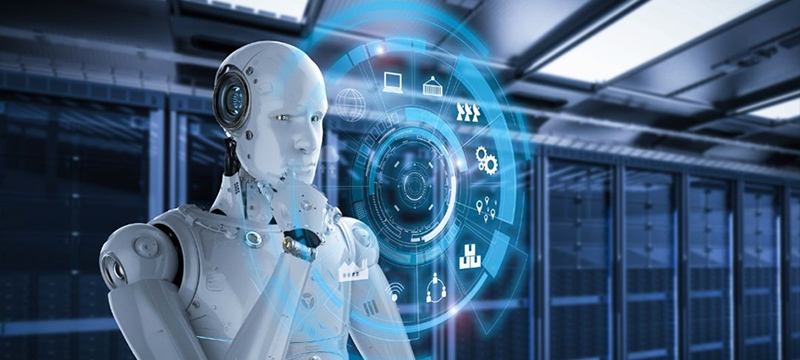
Across industries, organizations are undergoing rapid transformation driven by AI-powered technologies. Businesses are increasingly partnering with OpenAI and other AI development providers to create intelligent systems that improve operational efficiency, strengthen decision-making, and deliver better outcomes for customers and stakeholders through advanced AI software development services.
As digital transformation accelerates, AI agents autonomous or semi-autonomous systems designed to manage complex workflows are becoming essential components of modern business infrastructure. These intelligent solutions, supported by modern AI software development services, help organizations integrate advanced automation, analytics, and decision support into everyday operations. Their applications now extend across healthcare, finance, manufacturing, retail, logistics, and customer service, fundamentally changing how industries operate, innovate, and compete. Within IoT-driven environments, AI agents play a critical role in transforming raw device data into actionable intelligence, enabling smarter and more autonomous systems.
Below are five major benefits of AI agents across industries, followed by emerging trends shaping the future of AI-driven transformation.
1. Smarter Decision-Making Through Data Intelligence
One of the most valuable contributions of AI agents is their ability to analyze vast amounts of structured and unstructured data in real time. They can process operational reports, customer behavior, market trends, sensor data, and internal records far faster than traditional methods.
AI agents identify patterns, detect anomalies, and generate predictive insights that help organizations make faster and more informed decisions. In sectors such as manufacturing, they can forecast equipment failures before they occur. In finance, they help detect fraud and assess risk. In healthcare, they assist clinicians by interpreting complex medical information.
Rather than replacing human expertise, AI agents act as intelligent assistants that enhance decision quality and reduce uncertainty.
2. Greater Operational Efficiency and Lower Administrative Burden
Many industries continue to face productivity challenges caused by repetitive administrative tasks. AI agents address this by automating routine processes that traditionally consume time and resources.
These systems can support:
Automated scheduling and workflow coordination
Data entry and documentation
Billing and transaction processing
Inventory and supply chain tracking
Customer request handling and ticket management
Because AI agents operate continuously without fatigue, they improve speed, reduce errors, and eliminate bottlenecks. Organizations benefit from lower operational costs, better resource allocation, and faster service delivery.
By reducing manual workload, employees can focus more on strategic, creative, and customer-facing responsibilities.
3. Personalized Customer and User Experiences
Modern consumers expect fast, responsive, and personalized interactions. AI agents help businesses meet these expectations through intelligent digital engagement.
AI-powered assistants and chatbots can:
Provide instant responses to customer questions
Recommend products or services based on behavior
Deliver reminders and personalized updates
Guide users through support processes
Adapt communication based on preferences
By learning from data and interaction history, AI agents create experiences that feel relevant and individualized. This improves customer satisfaction, strengthens loyalty, and builds long-term trust.
Across industries such as retail, banking, and telecommunications, personalization is becoming a major competitive advantage.
4. Faster Innovation and Research Capabilities
AI agents are accelerating innovation by helping organizations process complex research tasks more efficiently.
They can:
Analyze large research datasets
Simulate scenarios and outcomes
Identify emerging trends
Test models rapidly
Generate recommendations for development strategies
In pharmaceuticals, AI shortens drug discovery timelines. In engineering, it improves product design cycles. In finance, it supports market modeling and strategic forecasting.
By reducing research time and improving analytical depth, AI agents help organizations innovate faster and respond more effectively to changing market conditions.
5. Predictive Monitoring and Proactive Management
AI agents are increasingly used to monitor systems continuously and predict issues before they become critical.
Connected devices, sensors, and digital platforms generate constant streams of operational data. AI agents interpret this data to detect warning signs early. In the context of IoT ecosystems, this combination of connected devices and AI-driven intelligence enables real-time monitoring and autonomous decision-making at scale.
Examples include:
Predicting machine maintenance needs in manufacturing
Detecting cybersecurity threats in IT systems
Monitoring patient health remotely in healthcare
Forecasting logistics disruptions in supply chains
This proactive approach reduces downtime, lowers risk, and supports more stable long-term performance.
Industries are shifting from reactive problem-solving to predictive management, which improves resilience and efficiency.
Future Trends of AI Agents Across Industries
The role of AI agents will continue to expand, with several major trends expected to shape the next decade.
1. Multimodal AI Systems
Future AI agents will process text, images, audio, video, and sensor inputs simultaneously, allowing richer contextual understanding and more accurate responses.
2. Privacy-First AI and Federated Learning
As data protection becomes increasingly important, federated learning will allow AI systems to improve without transferring sensitive data, strengthening privacy and compliance.
3. Autonomous Industry-Specific Agents
More advanced AI agents will independently manage specialized workflows in sectors such as manufacturing, healthcare, logistics, and finance under human supervision.
4. AI-Driven Interoperability
AI will help connect fragmented systems, allowing smoother communication between platforms, databases, and digital tools across organizations.
5. Human-AI Collaboration Models
The most successful organizations will adopt models where AI supports human expertise rather than replacing it, creating stronger productivity and better outcomes.
Conclusion
AI agents are transforming industries by improving decision-making, increasing efficiency, personalizing user experiences, accelerating innovation, and enabling predictive operations.
As machine learning, automation, and real-time analytics continue to evolve, organizations that adopt AI strategically will be better positioned to build more intelligent, resilient, and competitive systems.
Businesses that invest early in AI development will lead the next generation of industrial transformation.
The post The Transformative Benefits of AI Agents for Industries appeared first on IoT Business News.