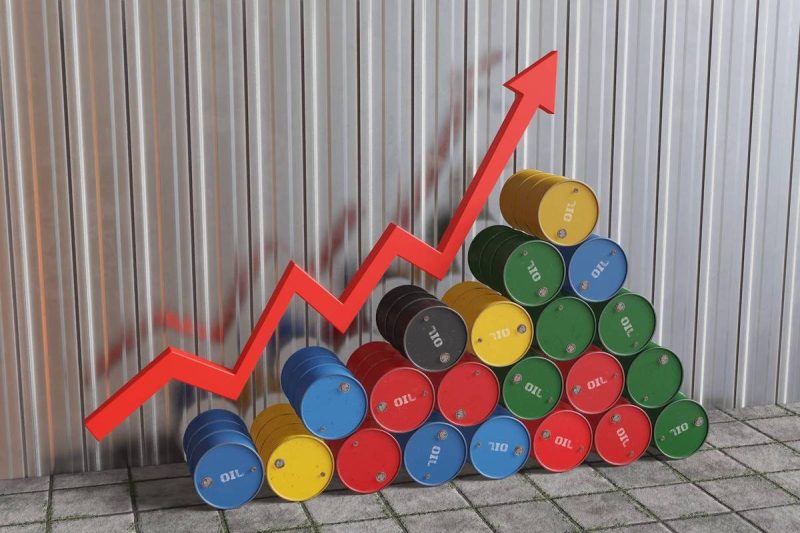
Global oil and gas prices rallied sharply over the weekend as escalating geopolitical tensions in the Middle East rattled energy markets and triggered fears of a major supply disruption.
Benchmark crude prices surged to their highest levels in years, with traders pricing in the possibility of prolonged instability across one of the world’s most important energy-producing regions. Brent crude briefly climbed above US$115 a barrel in early trading, while US benchmark West Texas Intermediate (WTI) also spiked sharply, marking one of the largest short-term gains since the energy shock following Russia’s invasion of Ukraine in 2022.
At the heart of the rally is the escalating conflict involving Iran and its regional rivals, which has raised concerns about the security of critical oil infrastructure and shipping routes.
Analysts say the market reaction reflects the risk that the conflict could disrupt flows through the Strait of Hormuz, a narrow waterway that normally carries roughly 20 percent of the world’s oil supply.
Recent attacks on energy infrastructure have intensified those fears. In early March, a drone strike targeted Saudi Arabia’s Ras Tanura refinery, one of the kingdom’s largest oil processing facilities, prompting temporary operational disruptions and contributing to an immediate spike in global crude prices.
At the same time, tanker traffic through the Strait of Hormuz has plummeted as shipping companies and energy traders reassess risks in the region. Reports indicate that hundreds of vessels have avoided the route, effectively constraining the flow of crude from major Gulf exporters including Saudi Arabia, Iraq, Kuwait and the United Arab Emirates.
Markets are particularly sensitive to disruptions in the Gulf because the region serves as a critical artery for global energy trade. If the conflict escalates further or shipping lanes remain restricted, analysts warn that millions of barrels per day could be removed from the market.
“The conflict has shifted from geopolitical risk to real supply disruption,” analysts said, noting that energy infrastructure attacks and transport bottlenecks are tightening the global supply outlook.
Energy traders are also watching the potential response from major producing nations and international organizations. The Organization of the Petroleum Exporting Countries and its allies, known as OPEC+, have historically attempted to stabilize markets by adjusting production quotas. Decisions by the group to cut or increase output often play a decisive role in shaping oil prices.
From surplus to deficit
“The global oil market has been in significant surplus since the start of 2025. Ahead of the military actions that began on 28 February, global oil supply was also expected to far exceed demand in 2026,” an International Energy Agency report notes.
“However, prolonged supply disruptions could flip the market into a deficit. The disruption to oil flows through the Strait has forced some operators to start shutting in production. The region’s output of refined products has also been impacted.”
Meanwhile, some governments are weighing the release of strategic petroleum reserves in an attempt to dampen the rally. Several Group of Seven countries have signaled they could coordinate emergency stockpile releases if supply disruptions worsen.
Despite these potential interventions, market analysts warn that geopolitical shocks tend to produce sharp and prolonged price swings. If the current conflict expands or energy infrastructure remains under threat, crude prices could climb even higher, with some forecasts suggesting oil could test US$120 to US$150 per barrel under severe supply constraints.
For the Independent Commodity Intelligence Services (ICIS) the duration of any disruption is the most critical factor in determining the scale of price impacts.
ICIS model-based analysis suggests that even a relatively short interruption to shipping through the Strait could push European gas prices sharply higher. Under a scenario in which the waterway is closed for four weeks, benchmark prices at the Title Transfer Facility (TTF) could rise to approximately 60 euros per megawatt-hour in March, with summer prices remaining about 20 percent above pre-crisis forward levels.
A more prolonged disruption would amplify the impact considerably. In a scenario where the Strait remains closed for three months, TTF prices could climb to roughly 85 euros per megawatt-hour, reflecting heightened competition for global liquefied natural gas (LNG) cargoes and growing concerns over European supply security.
The analysis underscores the extent to which Europe’s gas market remains exposed to global LNG dynamics, even after several years of efforts to diversify supply following the Russian invasion of Ukraine. The continent now relies heavily on LNG imports to balance demand, meaning that any disruption affecting shipments from the Middle East, one of the world’s largest LNG-exporting regions, would quickly ripple through European pricing.
Higher LNG prices would also have important implications for gas storage levels across the EU. As imported cargoes become more expensive, utilities may draw more heavily on existing inventories to meet near-term demand. This dynamic would likely lead to faster depletion of stored gas during the spring and early summer, leaving less cushion ahead of the winter heating season.
At the same time, elevated prices would increase the urgency of replenishing storage facilities during the summer injection period. Market participants would need to secure additional LNG cargoes to rebuild inventories, further intensifying competition for global supply and sustaining upward pressure on prices.
Recent adjustments to EU storage policy could somewhat soften the immediate price shock, but analysts say the broader supply-risk profile would remain largely unchanged. In particular, the European Union’s decision to relax storage-filling requirements may reduce short-term demand for gas injections, thereby moderating the initial spike in spot prices.
However, the policy shift does little to alter the underlying supply constraints that could emerge later in the year.
Securities Disclosure: I, Georgia Williams, hold no direct investment interest in any company mentioned in this article.