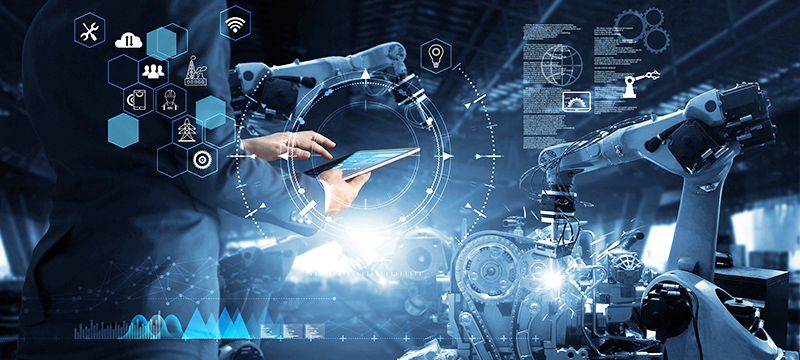
Industrial IoT has become a central component of modern industrial systems, driven by the need to improve operational efficiency, resilience and visibility across increasingly complex environments. As industrial assets generate growing volumes of data, organizations are looking beyond basic connectivity to extract meaningful insights that can support real-time decision-making and long-term optimization.
At its core, Industrial IoT brings together sensors, connectivity and data platforms to bridge the gap between operational technology and enterprise IT systems. This convergence is reshaping how industrial processes are monitored and controlled, while raising new questions around interoperability, cybersecurity and the practical delivery of business value at scale.
Key Takeaways
Industrial IoT connects physical industrial assets to digital systems for real-time monitoring and optimization.
It relies on layered architectures combining edge computing, connectivity and cloud platforms.
Use cases span predictive maintenance, asset tracking, energy management and process automation.
Interoperability, security and scalability remain key technical challenges.
Its business value lies in operational efficiency, reduced downtime and data-driven decision-making.
What is Industrial IoT (IIoT)?
Industrial IoT refers to the application of connected sensors, devices and software systems to monitor, collect and analyze data from industrial operations in real time, enabling improved efficiency, reliability and decision-making.
Unlike consumer IoT, Industrial IoT operates in environments where reliability, safety and latency are critical. It integrates operational technology (OT) systems—such as industrial control systems—with information technology (IT) platforms, bridging historically separate domains.
Industrial IoT plays a central role in Industry 4.0 initiatives, where data-driven automation and interconnected systems redefine industrial production and infrastructure management.
How Industrial IoT works
Industrial IoT systems are typically built on a multi-layered architecture that connects physical assets to digital platforms.
At the device layer, sensors and actuators are embedded into machinery, equipment or infrastructure. These devices collect data such as temperature, vibration, pressure or location.
The connectivity layer enables communication between devices and systems. This may involve wired networks such as Ethernet or industrial fieldbuses, as well as wireless technologies including cellular IoT, Wi-Fi or LPWAN.
Edge computing plays a critical role in Industrial IoT by processing data closer to where it is generated. This reduces latency, enables real-time decision-making and limits bandwidth usage.
Data is then transmitted to centralized platforms—either on-premises or in the cloud—where it is aggregated, analyzed and integrated into enterprise systems such as ERP or MES.
Applications and analytics layers provide dashboards, alerts and automation capabilities, enabling operators to act on insights derived from industrial data.
Key technologies and standards
Industrial IoT relies on a combination of hardware, connectivity technologies and software frameworks.
Connectivity technologies: Ethernet/IP, Modbus, PROFINET, LTE-M, NB-IoT, 5G and private cellular networks.
Communication protocols: MQTT, CoAP, OPC UA and DDS, designed for efficient and reliable data exchange.
Edge computing platforms: Industrial gateways and edge servers that process data locally.
Cloud and data platforms: Systems for data storage, analytics, digital twins and AI-driven insights.
Security frameworks: Device authentication, encryption and zero-trust architectures tailored to industrial environments.
Standards such as OPC UA are particularly important in Industrial IoT for ensuring interoperability between heterogeneous industrial systems.
Main IoT use cases
Industrial IoT supports a wide range of applications across sectors, often focused on improving operational efficiency and asset utilization.
Predictive maintenance: Monitoring equipment conditions to detect anomalies and prevent failures before they occur.
Asset tracking: Real-time tracking of tools, vehicles or inventory across industrial sites and supply chains.
Process optimization: Using sensor data to improve production efficiency and reduce waste.
Energy management: Monitoring and optimizing energy consumption in industrial facilities.
Remote operations: Enabling centralized monitoring and control of distributed assets such as pipelines or wind farms.
Safety and compliance: Monitoring environmental conditions and worker safety in hazardous environments.
In manufacturing, Industrial IoT is often integrated with robotics and automation systems. In logistics, it supports fleet management and supply chain visibility. In energy and utilities, it enables grid monitoring and predictive asset maintenance.
Benefits and limitations
Industrial IoT delivers measurable benefits, but its deployment involves technical and organizational trade-offs.
Benefits include:
Reduced downtime through predictive maintenance
Improved operational efficiency and productivity
Enhanced visibility across industrial processes
Better resource utilization and cost optimization
Data-driven decision-making across organizations
Limitations and challenges include:
Integration complexity with legacy systems
Interoperability issues across vendors and protocols
Cybersecurity risks in connected industrial environments
Scalability constraints in large deployments
High upfront investment and unclear ROI in early stages
Latency requirements also vary significantly depending on the use case. While some applications tolerate delays, others—such as real-time control systems—require ultra-low latency and deterministic communication.
Market landscape and ecosystem
The Industrial IoT ecosystem involves a broad range of stakeholders, each contributing to different layers of the technology stack.
Device manufacturers: Providers of sensors, modules and industrial equipment.
Connectivity providers: Telecom operators and network infrastructure providers offering cellular and private network solutions.
Platform vendors: Companies delivering IoT platforms, cloud services and data analytics tools.
System integrators: Organizations responsible for integrating Industrial IoT solutions into existing industrial environments.
Software providers: Developers of applications, digital twin solutions and industrial analytics tools.
The market is characterized by fragmentation, with multiple competing standards and architectures. Partnerships and ecosystems are therefore critical for delivering end-to-end Industrial IoT solutions.
Future outlook
Industrial IoT continues to evolve alongside advances in connectivity, computing and artificial intelligence.
5G and private cellular networks are expected to play a growing role in enabling reliable, low-latency connectivity for industrial environments. At the same time, edge AI is increasingly used to process data locally and enable real-time automation.
Digital twins are becoming more prevalent, allowing organizations to simulate and optimize industrial systems using real-time data. This trend is closely linked to the increasing adoption of cloud-to-edge architectures.
Standardization efforts are also progressing, aiming to improve interoperability across devices and platforms. However, fragmentation remains a challenge in the near term.
As Industrial IoT matures, the focus is shifting from connectivity to value creation—specifically how data can be transformed into actionable insights that deliver measurable business outcomes.
Frequently Asked Questions
What is the difference between IoT and Industrial IoT?
Industrial IoT focuses on industrial applications such as manufacturing, energy and infrastructure, where reliability, safety and performance requirements are higher than in other IoT verticals.
What are the main components of an Industrial IoT system?
An Industrial IoT system typically includes sensors, connectivity networks, edge computing devices, data platforms and analytics applications.
Which connectivity technologies are used in Industrial IoT?
Industrial IoT uses a mix of wired and wireless technologies, including Ethernet, Wi-Fi, LPWAN, LTE-M, NB-IoT and 5G, depending on the use case.
What are the biggest challenges in Industrial IoT deployments?
Key challenges include integrating legacy systems, ensuring interoperability, managing cybersecurity risks and scaling deployments efficiently.
How does Industrial IoT create business value?
Industrial IoT creates value by improving operational efficiency, reducing downtime, optimizing resource usage and enabling data-driven decision-making.
Related IoT topics
Edge Computing
Digital Twins
5G for IoT
LPWAN Technologies
IoT Cybersecurity
Smart Manufacturing
The post Industrial IoT (IIoT): Applications, Platforms and Business Value appeared first on IoT Business News.