
Taco Bell has quietly revived one of its most beloved and nostalgic menu items, but unlike many of the chain’s recent launches, the return arrived with little fanfare and no marketing campaign.
Over the past several years, Taco Bell has built a reputation around constant menu innovation, regularly introducing new products while maintaining accessible prices. That strategy has helped the chain remain culturally relevant and keep customers engaged in an increasingly competitive quick-service restaurant market.
At the same time, restaurant operators have began to lean on familiar products and nostalgia-driven launches to reinforce engagement. Limited-time returns of discontinued products can create renewed interest while encouraging repeat visits from longtime customers.
The approach has become increasingly important amid a challenging environment for the restaurant industry. Persistent inflation and economic uncertainty have prompted consumers to become more selective with discretionary spending, forcing chains to compete harder for every visit.
Taco Bell brings back the Enchirito
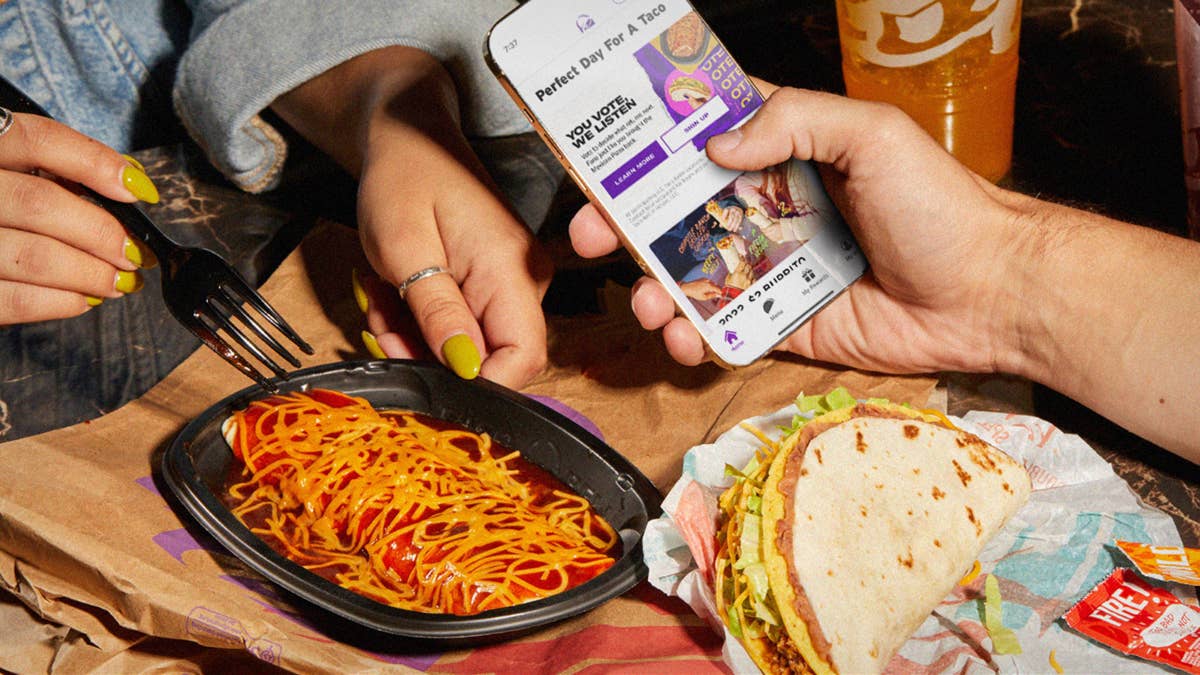
Taco Bell has once again brought back the Enchirito, a longtime fan favorite that was removed from the permanent menu in 2013.
The item previously returned for a limited nationwide run in 2023 after winning a fan vote, but was removed again shortly afterward.
Originally introduced in 1970, the Enchirito combines elements of a burrito and an enchilada. The menu item includes seasoned beef, refried beans, and onions wrapped in a flour tortilla and topped with red sauce and melted cheddar cheese.
The original version became recognizable for its three black olive slices, a feature that longtime fans closely associate with the item. However, the latest limited-time release does not include the topping.
Although Taco Bell did not heavily promote the comeback, the company acknowledged the return in an Instagram post by sharing a timeline of what it described as the “most important events in history,” including the invention of fire, the wheel, and the Enchirito’s 2026 return.
The post encouraged customers to “get it before the end of an era” and stated that the item would be available from June 18 through July 22.
Consumer responses in the comments section reflected both excitement and nostalgia surrounding the relaunch. Some fans celebrated the return and shared memories connected to the menu item, while others urged Taco Bell to make the Enchirito a permanent menu offering.
Several commenters also expressed disappointment that the black olive topping was not included in the current version.
Why was the Enchirito discontinued?
Even after its removal, loyal customers continued finding ways to recreate the Enchirito by customizing existing menu items, often ordering a bean burrito with ground beef and requesting extra sauce and cheese.
For many longtime fans, however, those modifications never fully replaced the original product.
Restaurant chains discontinue menu items for a variety of reasons, including menu simplification, kitchen efficiency, evolving customer preferences, and creating space for new products. Taco Bell has never publicly provided a specific explanation for removing the Enchirito from its permanent menu.
However, the item’s continued popularity became evident after customers launched petitions and online campaigns advocating for its return.
That sustained interest likely helped keep demand visible ahead of the Enchirito’s limited-time revival in 2023 and demonstrates how discontinued products can continue generating engagement years after leaving the menu.
Industry analysts have noted that nostalgia-driven menu launches can help restaurant brands generate attention and customer traffic while reducing some of the development risk associated with introducing entirely new products.
“By offering products that call back to nostalgia and childhood memories, people can easily justify buying a ‘little treat’ to bring them back to the past,” Vicki Breon, brand and customer experience strategist for Priority Designs, told The Food Institute.
Image source: Taco Bell
Taco Bell’s broader strategy
The Enchirito’s return also aligns with Taco Bell’s Relentlessly Innovative Next-Generation Growth (RING) strategy.
The initiative focuses on menu innovation, enhancing its digital sales experience, and international expansion, which aim to increase U.S. average unit volumes while tripling the brand’s global footprint by 2030.
Earlier this year, Taco Bell hosted its Live Más Live Event in Hollywood, where the company unveiled more than 20 new menu items and brand partnerships planned for future U.S. launches.
While innovation remains central to Taco Bell’s growth strategy, the company has increasingly balanced new product development with nostalgic returns.
Here’s some of my previous coverage on Taco Bell’s menu launches:
- Taco Bell makes menu move to take on McDonald’s and Starbucks
- Taco Bell, Jack in the Box bring back discontinued menu items
- Taco Bell brings back fan-favorite menu item with a bold upgrade
Reviving discontinued fan favorites allows the chain to reconnect with loyal customers and spark conversation around the brand without relying on unfamiliar menu launches.
Recent examples include the Decades Menu initiative and the return of products including Cheesy Dipping Burritos, Steak Garlic Nacho Fries, and the Quesarito, another menu item that developed a strong following before being discontinued.
Taco Bell’s strategy is delivering results
Recent performance suggests Taco Bell’s broader approach continues to resonate with consumers.
During the first quarter of fiscal 2026, Taco Bell’s U.S. system sales increased 10%, while same-store sales rose 8%.
The company also opened 30 gross new restaurants across eight countries during the quarter.
Among Yum! Brands’ (YUM) major restaurant concepts, Taco Bell delivered the strongest growth performance and accounted for 39% of the company’s divisional operating profit.
Yum! Brands CEO Chris Turner said Taco Bell’s multi-year growth strategy continues to expand the brand’s appeal and strengthen its market position.
“The impact of the strategy, expanded use occasions among light consumers has led to perception gains for Taco Bell on factors including good for dinner, good for large groups, and good for healthier options,” Turner said during the company’s latest earnings call.
“These expanded perceptions show that Taco Bell is driving not only short-term sales momentum, but importantly, long-term brand strength. Taco Bell is battling for the future consumer by pairing unbeatable value and innovation with cultural relevance.”
Related: After bankruptcy, iconic seafood chain closes flagship restaurant