
Most people think of Coca-Cola as the classic defensive consumer stock. The reliable one. The slow-moving brand, and a stock you buy when markets get choppy. And of course, the company that has been selling the same drinks for over a century.
That framing is missing something important right now. Morgan Stanley reiterated its Overweight rating on Coca-Cola (KO) and kept its $89 price target in a note shared with me at TheStreet on June 10.
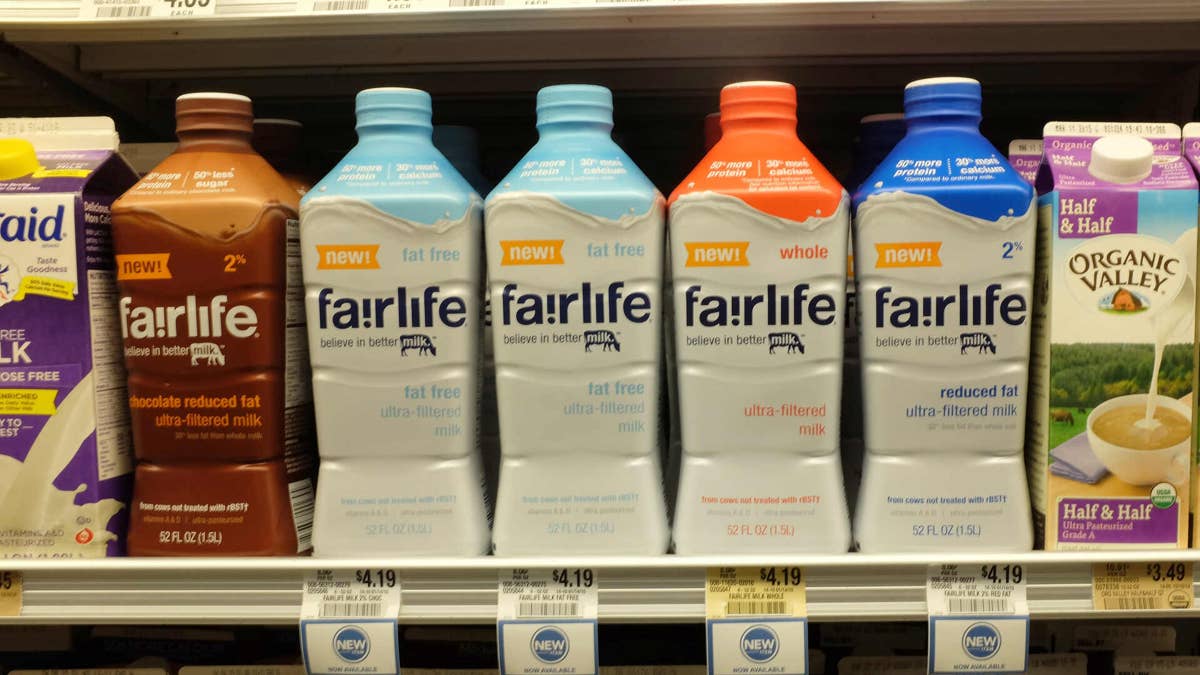
The firm reaffirms the stock as its top pick in North American beverages. But the note’s headline argument wasn’t about the flagship soda. It was about Fairlife.
That’s a business most investors barely think about, yes it’s one Morgan Stanley believes is quietly becoming one of the most underappreciated growth engines in the entire consumer sector.
Reiterate OW: Moo-ving the Needle; Fairlife Capacity Ramp on Top of Pricing Strength Drives Sustained OSG Outperformance.
KO is up 20.48% year-to-date compared to the S&P 500‘s 6.42% gain, according to Yahoo Finance, trading around $83 on June 10.
Also Read: Coca-Cola Company (The) (KO) Latest News
Why Morgan Stanley is calling Fairlife the most underappreciated driver in Coca-Cola’s portfolio
Fairlife now represents 4% to 5% of Coca-Cola’s total corporate sales, according to Morgan Stanley’s note.
That sounds small until you factor in the growth rate. Morgan Stanley models Fairlife growing at a 20% to 25% organic sales growth pace, contributing 100 to 125 basis points to Coca-Cola’s total corporate organic sales growth annually.
The near-term data is what makes the timing of this note significant. Fairlife had been supply-constrained, limiting growth for several quarters. A 30% capacity addition in 2026 is now flowing through, and the US scanner data has already responded.
More Retail:
- Another mall retailer quietly closed over 150 locations
- Ultra wealthy shoppers flock to this 63-year-old rugged retailer
- 72-year-old mall retailers to close more stores in 2026
In the most recent six-week period, Fairlife sales were up 10% year over year, accelerating sharply from the 2% growth rate of the prior 12 weeks, according to Morgan Stanley’s note.
My read of that reacceleration is that Coca-Cola is not capturing a one-week spike but converting constrained demand into actual revenue as the new capacity comes online. Fairlife’s competitive positioning — built on a proprietary ultra-filtration process and stronger brand equity than peers — makes the demand durable rather than promotional.
The pricing power argument that makes KO different from every other consumer staples stock
Morgan Stanley’s broader thesis on Coca-Cola rests on a structural pricing advantage that separates it from its consumer packaged goods peers. And the note makes the case in specific, quantifiable terms.
In the most recent four-week and 12-week scanner data, carbonated soft drink pricing at Coca-Cola, PepsiCo, and Keurig Dr Pepper is running at 3% to 4% year over year, according to the note, rational and sustained.
Related: Coca-Cola quietly stops selling an iconic soda flavor
This contrasts with an average of 0% to 1% pricing across large-cap household and personal care peers. Beverages as a category offer structurally higher pricing power because private label penetration is low, channel concentration is limited, and competitive intensity is contained.
Coca-Cola’s competitive position versus PepsiCo is also shifting in Coke’s favor, according to Morgan Stanley.
PepsiCo’s North American snacks business is declining — down 1.5% in the most recent four-week scanner data, approximately 490 basis points below Coke. That snack’s weakness is forcing PepsiCo to lean on CSD pricing for results, which the firm views as a structural tailwind for rational pricing across the category.
The Q1 2026 results and emerging market resilience that complete the bull case
Coca-Cola’s most recent quarterly results, reported April 28, reinforce the foundation underlying Morgan Stanley’s target:
- Net revenues grew 12% year over year
- Organic revenues grew 10%
- Global unit case volume grew 3%
- Operating margin expanded to 35.0% from 32.9%
- Comparable EPS grew 18% to $0.86
- Free cash flow of $1.8 billion
Source: Coca-Cola First Quarter 2026 Results
The impact of the Iran conflict on Coca-Cola’s business has been limited, particularly in emerging markets, which are “holding up well” based on CPG company feedback, according to Morgan Stanley.
That resilience matters because Coca-Cola derives 33% of its revenue from emerging markets — above the 24% peer average — giving it a structural growth advantage as those populations continue trading up into branded beverages.
Also Read: History of Coca-Cola: Timeline, facts & milestones
Morgan Stanley’s $89 price target is based on 25 times its 2027 EPS estimate. That’s a low-single-digit premium to peers like Colgate, Procter and Gamble, and Church and Dwight, despite Coca-Cola’s materially higher long-term organic sales growth potential.
At the current price, that framing makes the risk/reward straightforward: a premium business trading at a modest premium multiple, with an accelerating hidden growth driver that the market has not fully priced.
Related: Coca-Cola brings an exclusive Sprite pack to Walmart rival