
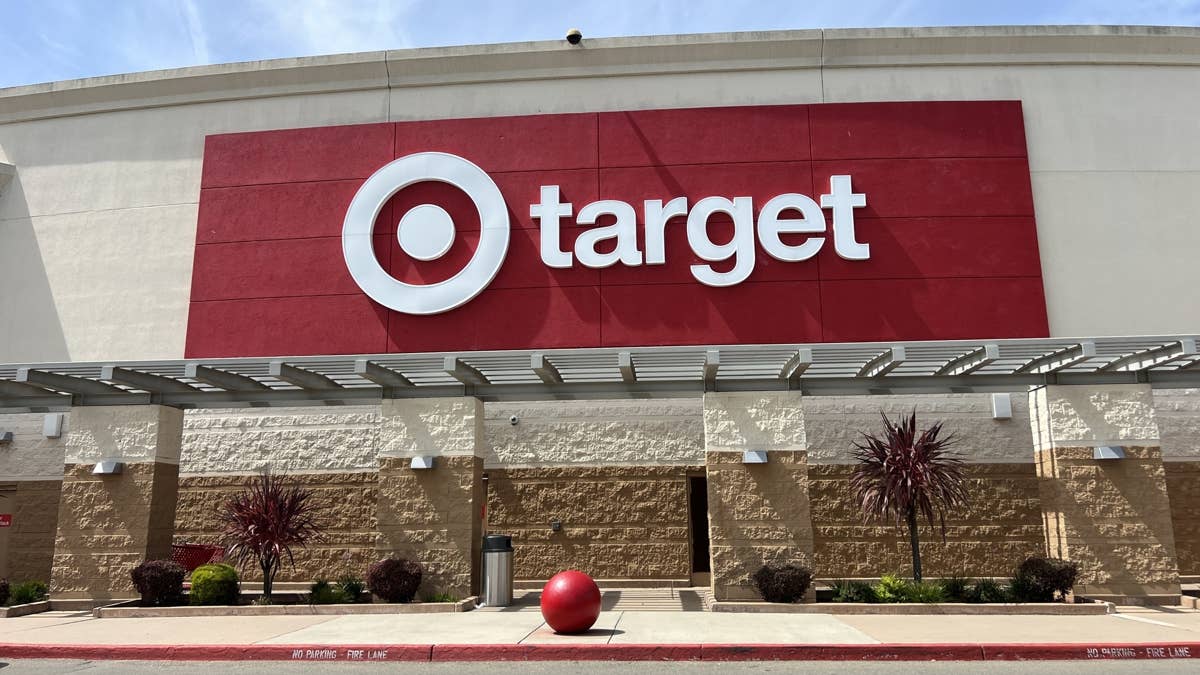
Target gave investors a better profit outlook after its latest quarter, yet Bank of America is still taking a cautious view on the stock as the retailer works through a longer turnaround in a competitive consumer backdrop.
BofA reiterated its Underperform rating on Target and kept its $110 price objective, according to the Bank of America note given to TheStreet. That target implies roughly 10% downside from the $122.33 price listed in the note, even after BofA raised its earnings estimates following Target’s first-quarter beat.
The firm said Target raised fiscal 2026 guidance near the high end of its $7.50 to $8.50 range, which reflected the strength of the first quarter. BofA raised its fiscal 2026 and fiscal 2027 EPS forecasts by 4% and 5%, respectively, to $8.20 and $8.53, while lifting its fiscal 2029 estimate to $9.05 from $8.50.
That was not enough to change the bank’s overall view. BofA said “turnarounds take time” and warned that decelerating sales trends could compress Target’s multiple and limit the incremental upside investors might expect from the guidance raise.
Target faces a tougher second-half sales setup
The main concern from BofA is that Target’s sales comparisons get harder from here. The firm said Target is starting to lap the Nintendo Switch 2 launch in early June, while the tax refund tailwind that helped consumers earlier in the year is fading.
That creates a more challenging setup for the second quarter and the back half of the year. BofA models Target’s comparable sales up 1.5% in the second quarter and up 0.5% in the second half, suggesting that the company still needs to prove the improvement can continue as easier benefits roll off.
The bank also pointed to broader consumer uncertainty, including higher gas prices and the post-tax refund season, as part of the reason it lowered the multiple used for its Target valuation. BofA’s $110 price objective is based on 13 times its fiscal 2027 EPS estimate, below Target’s 15-year average of 15 times.
Target’s margins may help, but pressure remains
Target’s margin setup looks more constructive than its sales setup, according to BofA, although the bank is still watching several moving pieces that could affect the company’s earnings power.
BofA said second-quarter gross margin drivers should be directionally similar to the first quarter. The firm pointed to better full-price sell-through, ongoing advertising benefits, supply-chain efficiencies, and another quarter of shrink-related headwinds tied to the timing of accruals.
More Target
- Target sees unexpected shift in customer behavior
- Target announces major changes across 130 U.S. stores
- Target makes a big family-friendly product move
The note also said SG&A growth should moderate from the 7% increase Target saw in the first quarter.
BofA said that moderation should be supported by the timing of store openings and remodels, lower store and distribution center labor as sales flex down, and less pressure from incentive compensation normalization after the first quarter.
Even with those positives, the bank’s broader investment rationale remains cautious. BofA said Target’s comp sales and margin headwinds could continue to pressure the stock, while its lack of scale compared with larger competitors in digital advertising and third-party online marketplace operations may limit its ability to offset margin pressures and fund strategic investments in automation, technology, and AI.
Target’s merchandising reset shows early signs
BofA also acknowledged that Target has made progress in merchandising, which remains one of the most important parts of the company’s turnaround story.
The firm said it is encouraged by early traction in trading cards and toys, including the phased launch of the Pokémon collection. BofA also pointed to the planned rollout of Target Beauty Studio in more than 600 stores this fall, along with the start of a multiyear reset in Home during the second quarter.
That Home reset includes a significant refresh of decorative accessories, covering about 75% of the assortment, according to the note. Those changes could help Target sharpen its appeal in categories where the company has historically had stronger brand perception with shoppers.
BofA still said it is too early to tell how much of the first-quarter improvement was specific to Target rather than driven by the broader retail industry. The firm also expects discretionary categories, particularly apparel and home, to remain highly competitive, with pricing uncertainty still creating possible downward pressure.
BofA sees limited upside for Target stock
Target remains one of BofA’s few Underperform-rated names in its U.S. hardlines and broadlines retail coverage cluster. The bank has Buy ratings on companies including Walmart, Costco, Home Depot, and Boot Barn, while Target sits in the Underperform category alongside Floor & Decor.
The gap helps explain why BofA is hesitant to give Target the benefit of the doubt after one stronger quarter. The bank sees early progress, raised earnings estimates, and a better guidance range, yet it still believes the company faces a harder sales environment and lingering pressure from competitive discretionary categories.
Related: Bank of America revamps Target stock price target ahead of earnings